

I just finished teaching the Techstars Angel Series for the second time. This is a 5-part workshop for graduates of Techstars globally. During the first cohort I sold my company. During the second, my basement flooded. I'm looking forward to cohort 3...
Angels are incredibly important for startups at the early stage. But I am always struck by how mysterious this world seems to entrepreneurs.
There is no such thing as an Angel. At least not in the sense that a VC is a professional fund manager. An Angel is a sufficiently-wealthy person (an accredited investor if you're following the rules) who invests in private companies.
That could describe doctors, lawyers, exited founders and Super Angels who write books and speak at conferences.
For founders, it's difficult to raise from Angels if you don't spend some time understanding who they are and how they're different from other investors.
Not all Angels are alike
The first mistake founders make is not realizing there are many, many types of Angels out there. I've listed four types below as well as characteristics that founders should think about when they engage with an Angel.
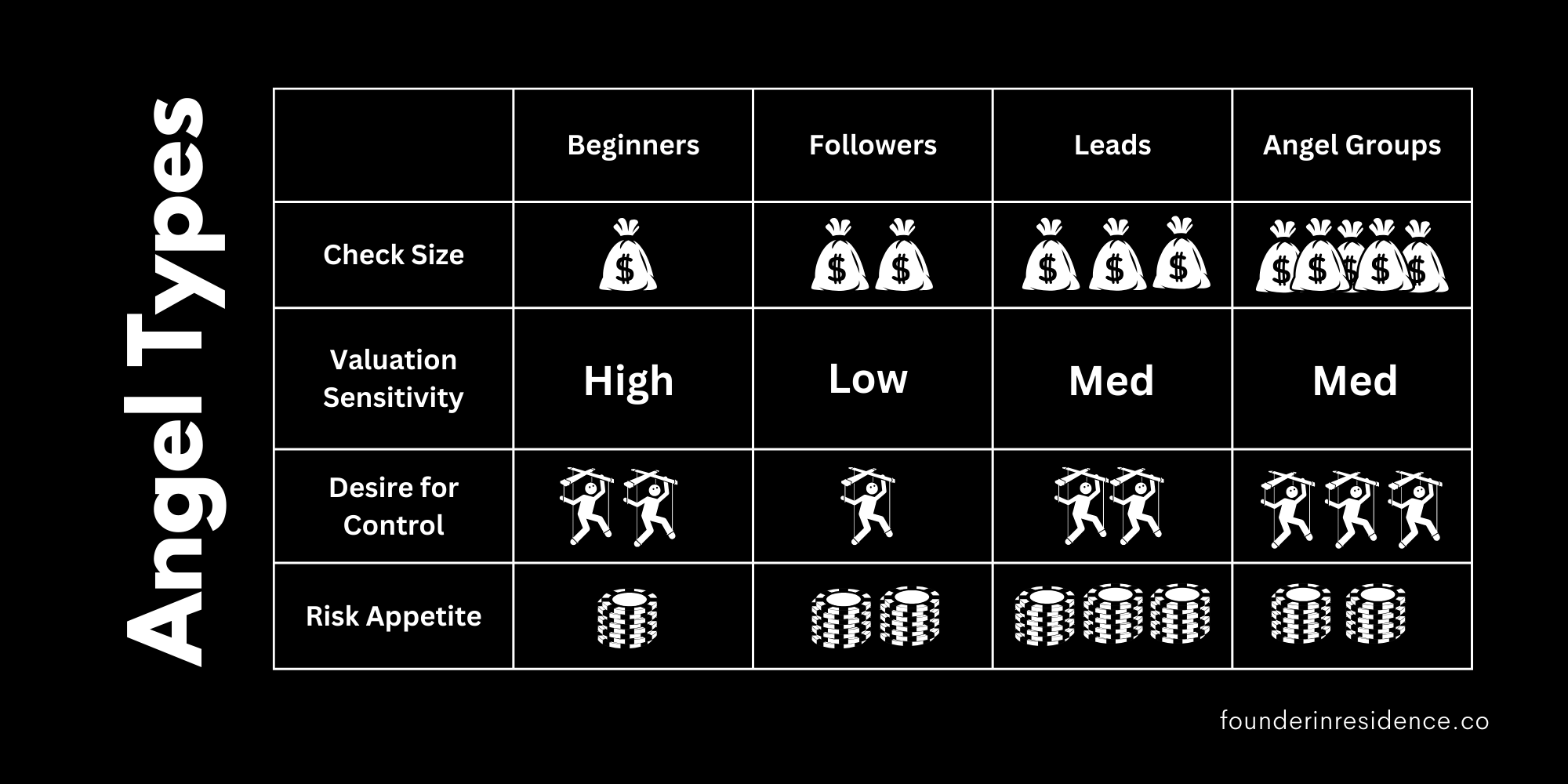
Beginner Angels
No one would voluntarily label themselves a beginner Angel, but this is my subjective name for people who are just starting to invest and have written fewer than 10 checks. Or people who write very small checks, like $5000.
Beginners usually write small checks, do not like high valuations, and have a low risk appetite.
Less experienced Angels can be great investors. Their enthusiasm can help build positive vibes and momentum with other investors.
What's interesting is that, in my experience, beginners also want more control, probably because they're nervous about their first few investments going bust.
Followers
Most Angels are followers and this is not a value judgement. Actually, it's a good thing for founders.
Followers are attractive because they pair a reasonable check size with a lower sensitivity to valuation, and higher appetite for risk, because they are following others.
Many Angels do not have time to invest in lengthy due diligence and a lot of investing is social, whether an Angel is part of a group or a startup community.
You can normally recognize a follower by how they talk about their deals. If they emphasize who else is part of a deal, or name drop a prominent lead investor, they're usually a follower.
Leads
Like in a VC round, finding a lead investor in an Angel round is crucial.
The lead does not necessarily need to invest the most, though often they do. What matters to your round is that they publicly endorse you, at least to other investors. They write the first check, did their diligence on your company, and are willing to share their findings with others.
A lead can be a subject matter expert, a well-known Super Angel with a track record, or just someone who believes in you.
A lead still wants a reasonable valuation but is usually experienced enough not to hammer founders down too much. They want more control, commensurate with being a lead, but less than you would expect.
Most importantly, a lead believes in the potential of the company and will be more keen to take risks and grow faster.
Angel Groups
There are over 200 Angel groups in the United States, according to the Angel Capital Association. Angel groups exist in practically every country so they are a good place for founders to raise potentially millions of dollars.
There are also downsides to Angel groups. Most have a rigid monthly schedule of meetings and limited pitch slots meaning founders will have to wait their turn before getting a meeting.
But the potential to get in front of 20-30 Angels, or hundreds in the largest groups, is too good to pass up.
Angel groups can raise large amounts of money, even taking up an entire round of financing. They will expect a valuation that's less than the hottest Bay Area startup, but more than a local Angel. They understand the need to take risks but are also aware of being burned by startups that take off then come crashing down. Angels love trading war stories.
Although it varies by group, many encourage members to take board seats and play an active role in the company. These are not necessarily negatives. But founders should be aware that an Angel group partner will want to be more active in the business vs an individual Angel.
How to use this knowledge to raise from Angels
So how can founders use this knowledge to raise money from Angels?
The most important step is to recognize if an Angel is a potential lead(er). This applies to Angel groups too. Even if 10 Angel group members raise their hands to invest, the next step is to convince one of them to be the lead. No lead, no deal.
Identifying the lead is important because one of the most frustrating things for a founder is to pitch an Angel who has no intention of investing unless someone else takes the lead.
How to you recognize a lead?
- Their first question is not “Who else is investing?”
- They talk about other investments where they've played an active role
- They have the confidence and time to do their own diligence
- They know other Angels they can introduce you to
In other words, they are independent thinkers. Just like you.
Once you have a lead candidate, invest most of your time in getting them to Yes. Because once they are on board their endorsement will influence all the followers. I've turned a lead investment into a investments totalling 20x what they invested.
In summary: put most of your energy finding a lead Angel, keep followers warm to close later, and convert beginners into followers.


